
Understanding and applying biological resilience, from genes to ecosystems
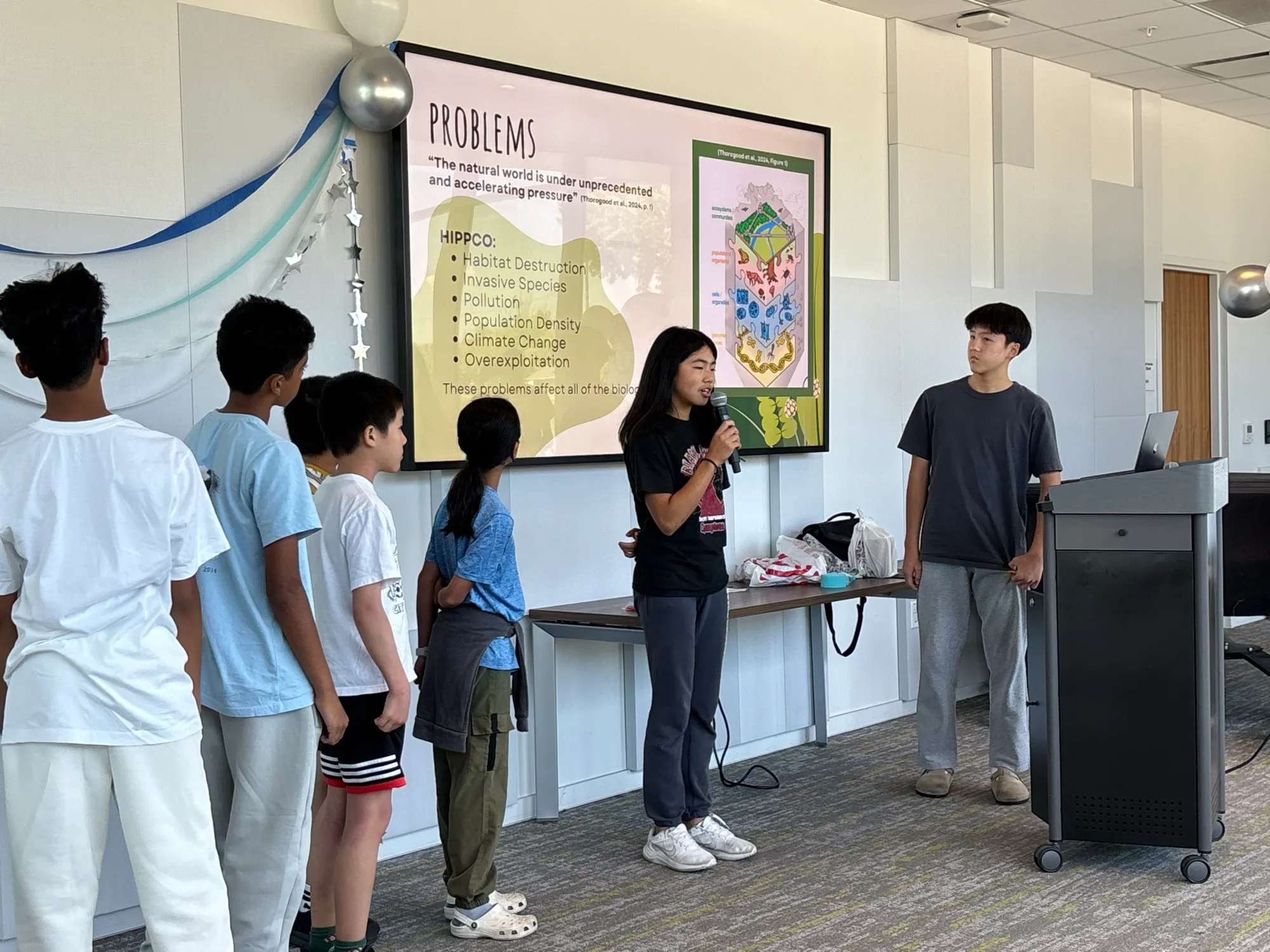
In their article "Understanding and applying biological resilience, from genes to ecosystems," Thorogood, Mustonen, et al. (2024) explore significant environmental challenges facing our planet. Major problems identified include habitat destruction, invasive species, pollution, population issues, climate change, and overexploitation. These major problems make an impact on all of the biological levels. For example, invasive species may have an impact on the community part of the biological levels because of competition for resources and a genetic advantage.
The central question the authors address is, "Why can some species, communities, or ecosystems persist and adapt through disturbances while others can't?" (Thorogood et al., 2024, p. 1). To explore this, the authors introduce the concept of biological resilience, defined as an ecosystem's ability to resist and recover from perturbations. Factors contributing to strong biological resilience include high genetic diversity, the capability to remember and learn from past experiences, and the ability to adapt and evolve. Evolutionary memory helps the species "prepare" for a future disturbance, while plasticity allows changes to an organism's phenotype, causing more genetic diversity thus increasing the species' ability to buffer disturbances.
The review defines several key concepts clearly. Resistance is described as an ecosystem's ability to withstand disturbances without significant functional changes. Recovery involves repairing a degraded ecosystem to restore its functionality and health. Plasticity refers to an organism's ability to alter its physical characteristics or behaviors in response to environmental changes. Additionally, a distinction is drawn between disturbance and perturbation. Disturbance is a disruptive event that causes significant and lasting changes, such as deforestation, while a perturbation is the resulting effect of the disturbance, like habitat loss and loss of wildlife.
In this study, surveyors used Long Term Surveys, Big Data, Modeling simulations, Experimental Perturbations and Natural Experiments. Long term surveys are surveys that span over long periods of time. They work by repeatedly collecting data from one unvarying group of subjects. Big data is a large amount of data generated from digital interactions. It can detect patterns and trends in results. Modeling and simulations create a digital representation of a system to gather data. Experimental Perturbations are artificial perturbations introduced to a natural system to gather data real-time. These four methodologies help surveyors gather information on ecological systems.
The authors using reductionist approaches to focus on individual biological levels which helps make things clearer and easier to handle, emphasize that resilience operates at various biological levels including ecosystems/communities, populations/organisms, cells/organelles, and genomes/genes. The past eco-evolutionary history of a species plays a crucial role in its current ability to handle environmental challenges. Encountering similar issues historically can lead to genetic adaptations that enhance resilience in the present, as natural selection favors better adapted species over time (Thorogood et al., 2024, p. 2).
To illustrate cross-level resilience, the example of salmon is discussed. Overfishing, a disturbance decreasing salmon populations, negatively impacted capelin as well, as it causes the population to increase due to reduced predation. There is also less food and resources available to the capelin population because of the significant increase in the capelin population. This goes to demonstrate interconnectedness across biological levels. Genetic changes in salmon's adipocyte production exemplify how gene-level alterations can influence organism-level resilience (Thorogood et al., 2024, p. 8).
Several testable hypotheses are presented to advance scientific understanding of resilience. The first hypothesis suggests past experiences help animals to adapt to future disturbances, illustrated by songbirds altering their songs based on temperature. The second hypothesis suggests that greater diversity increases future ecosystem resilience, supported by ecological memory. The third hypothesis proposes that adaptation to current disturbances could reduce future resilience, shown by how trees adapt to humidity changes (Thorogood et al., 2024, p. 7).
We observed a local ecosystem, Lake Elizabeth. Although there was a lot of evidence of human activity, there was plenty of vegetation in the area. There were many paved paths, buildings, people, and signs of drought. One area we focused on that had strong resilience was Duck Island, as it is isolated from human activity and is a place where many birds and animals seek refuge. However, there are some withered plants around paths and other places with lots of humans. Two major stressors we identified are paved surfaces and human activity. Paved paths reduce efficient animal movement, decrease available habitats, and make genetic adaptations such as sturdier paws or feet necessary. Human activity may disrupt natural hunting behaviors, increase dependency on human-provided food, cause cellular-level harm from pollution, and prompt genetic adaptations like improved immunity to pollutants. However, these adaptations cannot happen within a few generations of a species, so to apply biological resilience and recovery to the Lake Elizabeth ecosystem, it is vital to stop animal feeding, install fountains to reduce water stagnation, reduce paved paths, reduce litter, and create protected areas for wildlife regeneration.
The main takeaway is that multiple factors across different biological layers affect an ecosystem's resilience and response to perturbations. This understanding has practical applications in management and conservation, such as studying forest regeneration after fires to enhance future resilience and conservation strategies. A question remains regarding how an ecosystem with weak biological resilience begins to deteriorate and collapse when unable to recover from perturbations.